Legislation Without Legislators: The Quiet Coup of the Administrative State
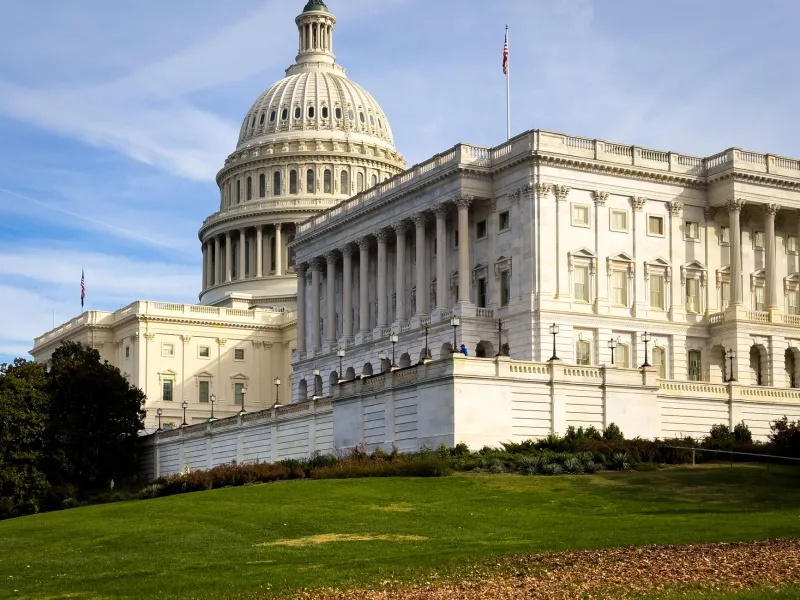
Article I of the Constitution is unambiguous: "All legislative Powers herein granted shall be vested in a Congress of the United States." Not some. Not most. All. Yet by any honest measure, the overwhelming majority of law that governs American economic life today is not written in the Capitol. It is written in agency conference rooms, published in the Federal Register, and enforced with the full coercive authority of the United States government — without a single member of Congress ever voting on it.
The scale is difficult to overstate. In a typical recent year, Congress enacted a few hundred public laws. Federal agencies finalized several thousand binding rules, with thousands more in the pipeline. The Code of Federal Regulations now runs past 180,000 pages. Every page carries the force of law, the threat of penalty, and the weight of compliance costs that someone — usually a small business, always a consumer — must ultimately pay.
How We Got Here
The administrative state did not arrive by coup. It arrived by delegation, and that is precisely what makes it constitutionally troubling.
Congress, facing complexity it did not wish to master and accountability it preferred to avoid, discovered a convenient device: write statutes in sweeping, vague generalities and instruct agencies to "fill in the details." The Clean Air Act directs regulators to set standards in the "public interest." Financial statutes prohibit "unfair or deceptive" practices. Each phrase is a blank check. Each check is cashed by an unelected bureaucracy with a tenure measured in decades and an accountability measured in none.
The Supreme Court's 1984 decision in Chevron v. NRCC formalized the arrangement, directing courts to defer to agencies' interpretations of ambiguous statutes. For forty years, that doctrine functioned as a one-way ratchet: ambiguity begets agency power, agency power begets more ambiguity, and Congress — happily — is never forced to take a vote on anything difficult. The Court's recent retreat from Chevron is a welcome correction, but it addresses only the interpretive question. The deeper problem is structural: too much law is being made where no election can reach it.
The Economic Invoice
Defenders of the administrative state argue that modern governance requires expertise, and there is truth in that. Airplanes should be inspected by people who understand airplanes. But expertise is an argument for informed advice to lawmakers — not for lawmaker status. And the economic costs of regulation-by-bureaucrat are neither abstract nor benign.
Federal estimates of regulatory compliance costs run into the trillions of dollars annually when fully accounted — a sum that functions as a hidden tax embedded in every price. These costs are profoundly regressive. Large corporations maintain compliance departments; a twenty-employee manufacturer hires consultants or drowns. The predictable result, documented across industry after industry, is that regulatory burden functions as an entry barrier that entrenches incumbents. The biggest beneficiaries of the administrative state are not consumers and not workers. They are established firms for whom every new page of regulation is a moat.
There is also a fiscal perversity worth naming: much of this rulemaking is self-funding and self-perpetuating. Agencies assess fees, hire staff, interpret their own mandates, expand their jurisdictions, and repeat. No appropriation fight, no election, no sunset. It is the only branch of governance that grows by its own signature.
The Constitutional Case
The framers separated powers not as an administrative convenience but as the central safeguard of liberty. James Madison's insight in Federalist 51 was that ambition must counteract ambition — that concentrating the powers of writing, executing, and adjudicating law in the same hands invites tyranny of the soft, bureaucratic kind. An agency that writes the rule, enforces the rule, and adjudicates challenges to the rule exercises all three powers at once. The founders would not have needed a law review article to identify the problem.
The remedy is not the abolition of agencies. It is the restoration of accountability, and several mechanisms are readily available:
- The REINS Act, requiring congressional approval for any major rule with significant economic impact, would restore the vote — and with it, the accountability — to lawmaking.
- Sunset provisions would force every major regulation to justify its continued existence on a fixed schedule, rather than persisting by inertia.
- Regulatory budgets, as several states have adopted, would require agencies to offset the cost of new rules by eliminating old ones, imposing the same discipline on regulation that families apply to spending.
The Choice Before Congress
Every member of Congress, whatever the party, benefits from the current arrangement: they may posture about problems while leaving the politically difficult decisions to agencies, collecting credit for intent and avoiding blame for consequence. The American people, meanwhile, are governed by rules no one ran on, no one voted for, and no one can vote out.
A republic that delegates its lawmaking is a republic in name only. The Constitution assigned the legislative power to the branch closest to the voters for a reason. It is past time Congress took the assignment back.