Watts and Wants: How Environmental Mandates Quietly Empty Working Americans' Wallets
There is a particular kind of political dishonesty that arrives dressed in virtue. It speaks the language of stewardship, sustainability, and collective responsibility. It promises a cleaner tomorrow while carefully obscuring who, precisely, will pay for it today. America's expanding apparatus of environmental energy regulation has become a masterclass in this form of misdirection — and the households absorbing the cost are rarely the ones cheering at the climate summits.
The mechanism is not complicated, though its architects prefer that it remain opaque. When federal agencies and state legislatures impose renewable portfolio standards, carbon reduction targets, or mandatory grid modernization requirements, utilities do not absorb those costs. They cannot. Regulated monopolies pass compliance expenses directly to ratepayers through tariffs, surcharges, and base rate adjustments approved by compliant public utility commissions. The result is a de facto energy tax — one that never appears on a ballot, never receives a floor vote, and never requires a politician to defend it by name.
The Surcharge Nobody Voted For
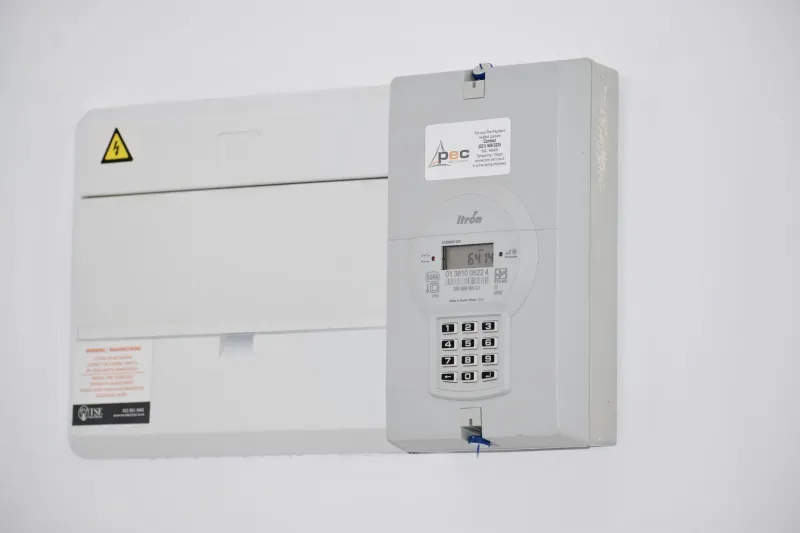
Open a residential electricity bill in California, Illinois, or New York and you will find a proliferation of line items beneath the actual charge for electricity consumed. "Renewable energy surcharge." "Clean energy transition fee." "Grid reliability adjustment." These are not administrative curiosities. They represent the monetized cost of legislative mandates transferred, with regulatory blessing, onto consumers.
In California, the average residential electricity rate has climbed to among the highest in the continental United States — more than double the national average in some tiers — driven in significant part by the state's aggressive Renewables Portfolio Standard, which requires utilities to source increasingly large percentages of power from qualifying renewable generators. The Public Policy Institute of California has documented that low-income households in the state spend a disproportionate share of their income on energy. The burden is not shared equally. It is concentrated precisely where it causes the most damage.
Texas, by contrast, deregulated its retail electricity market in 2002, introducing genuine competition among providers and separating generation from transmission and distribution. The results were not perfect — the 2021 winter storm exposed serious grid vulnerabilities — but for years prior, competitive pressure held retail rates meaningfully below those of states where vertically integrated, mandate-laden utilities faced no market discipline whatsoever.
Renewable Portfolio Standards: A Mandate in Sheep's Clothing
Thirty states and the District of Columbia currently maintain some form of Renewable Portfolio Standard, or RPS. The policy compels utilities to purchase or generate a specified percentage of electricity from approved renewable sources, regardless of whether doing so represents the lowest-cost option for consumers. When renewable generation is more expensive than conventional alternatives — which, despite significant cost reductions in solar and wind, remains true during periods of low wind and sunlight, or when transmission constraints apply — that cost premium flows downstream.
Proponents argue that mandates accelerate deployment, driving down costs through scale. There is partial truth in that argument. But it conflates two distinct phenomena: cost reductions driven by genuine technological progress and market competition, and cost reductions achieved by mandating volume regardless of readiness. The former benefits consumers organically. The latter benefits specific industries at consumers' expense, often with generous production tax credits layered on top — a double subsidy paid once by the ratepayer and again by the federal taxpayer.
The Lawrence Berkeley National Laboratory has estimated that RPS compliance costs utilities — and therefore consumers — billions of dollars annually in above-market procurement. Those billions do not vanish. They appear on bills, reduce disposable income, and compress household budgets already stretched thin by inflation.
The Regressive Reality
Energy economists have a term for the share of household income consumed by energy costs: energy burden. The American Council for an Energy-Efficient Economy has found that low-income households carry an energy burden roughly three times higher than that of median-income households. For these families, electricity is not a discretionary expense that can be trimmed when rates rise. It is a fixed necessity, competing directly with food, rent, and medical care.
This is the dimension of environmental energy policy that its advocates most strenuously avoid discussing. A carbon surcharge or a renewable mandate does not distinguish between a household earning $35,000 per year and one earning $350,000. The dollar amount on the bill may be identical. The sacrifice it represents is not. When a working family in rural Ohio or suburban Georgia pays $40 more per month than they did three years ago — not because they are consuming more electricity, but because their utility's compliance portfolio has grown more expensive — that $480 per year is not an abstraction. It is a car repair deferred, a prescription delayed, a child's extracurricular activity abandoned.
What Markets Can Do That Mandates Cannot
The argument here is not that environmental quality is unimportant or that energy sources carry no consequences beyond their price. It is that top-down regulatory mandates are a demonstrably inefficient mechanism for achieving environmental goals — and that the inefficiency is not costless. It is paid, disproportionately, by people without lobbyists.
Market mechanisms, properly constructed, can drive genuine environmental improvement without conscripting consumers into financing politically preferred industries. A revenue-neutral carbon price — one that returns proceeds directly to households rather than feeding agency budgets — would internalize environmental costs while preserving consumer choice and competitive pressure. It would reward the most efficient low-emission technologies rather than subsidizing a predetermined list of approved sources. It would not require a utility commission to approve a surcharge or a legislature to mandate a procurement percentage.
Private investment in nuclear energy, advanced geothermal, and next-generation battery storage is accelerating precisely because market participants recognize long-term demand for reliable, low-emission baseload power. These developments have occurred largely despite the regulatory environment, not because of it. Clearing the permitting obstacles that currently extend nuclear project timelines by years — obstacles built by the same regulatory infrastructure that mandates renewable procurement — would do more for long-term clean energy capacity than any portfolio standard yet devised.
The Accountability Gap
Perhaps the most troubling feature of the current system is its insulation from democratic accountability. When a state legislature votes to raise income taxes, voters know who to hold responsible. When a public utility commission approves a rate case that incorporates $200 million in renewable compliance costs, the political trail is deliberately obscured. The mandate came from a bill passed years earlier. The cost was certified by an appointed body. The utility simply filed the paperwork. No single actor is responsible, which means no single actor is accountable.
Free enterprise depends on transparency — in prices, in costs, and in the decisions that produce them. The current structure of environmental energy regulation is the antithesis of that transparency. It is a system engineered to achieve politically determined outcomes while diffusing the cost across millions of bills, where it will be noticed least and contested almost never.
Working Americans deserve an energy policy that takes both environmental quality and economic reality seriously. They deserve to know what they are paying, why they are paying it, and who decided they should. Until environmental policy is subjected to the same honest cost accounting we would demand of any other expenditure, the green agenda's hidden tax will continue to be paid by those who can least afford it — and celebrated by those who will never see it on their bill.